
Mrinal Ghosh does some fast psychological math earlier than he arrives at a jaw-dropping estimate: his household has spent about Rs 46 lakh over the previous decade and a half to maintain his son Aronyak’s chess profession. Simply to make him a grandmaster. Then he drops the true headline assertion that Rs 46 lakh might be the least anybody in India has spent within the pursuit of changing into a GM. For a middle-class household in Kolkata, elevating even this quantity has meant sacrifices. Of Mrinal’s ancestral property. Of his spouse Sanchita’s wedding ceremony jewelry. And Aronyak’s personal prize cash gained at occasions, each penny of which is invested again into his profession.
All of these sacrifices lastly noticed Aronyak turn out to be India’s ninety fifth grandmaster earlier this week.

There’s a false impression that chess is an affordable sport. No costly tools or accoutrements wanted, in any case. No have to make use of sports activities science groups both. No have to ebook stadiums or courts to coach in.
However Aronyak’s rise to grandmaster standing has shone a lightweight like by no means earlier than on the monetary burden of the pursuit to turn out to be a grandmaster.
“Dad and mom needs to be ready with not less than Rs 70 lakh (from the beginning of the chess profession to changing into a GM) if one plans to get their child to be a GM,” says Monomita Chakraborty, the mom of Mayank Chakraborty, India’s 94th grandmaster.
These are simply prices incurred in getting a participant to the grandmaster degree. To get higher from there, the prices multiply quickly. In actual fact, many individuals within the sport will let you know that Aronyak and Mayank bought to the GM degree actually low-cost.
Pattern this: 12-year-old Aarav Sarbalia’s father Yatin estimates that they spent Rs 25-30 lakh simply in 2025 to gas his dream within the sport. Presently, Aarav is a FIDE Grasp, which is 2 rungs under the grandmaster degree.
Story continues under this advert
“We spent not less than 4 months of final 12 months overseas enjoying in tournaments. We had been hoping to land some sponsors who would assist us bear the burden, however when none got here, we began to make content material on Instagram, hoping that it could finally result in monetisation alternatives,” says Yatin.
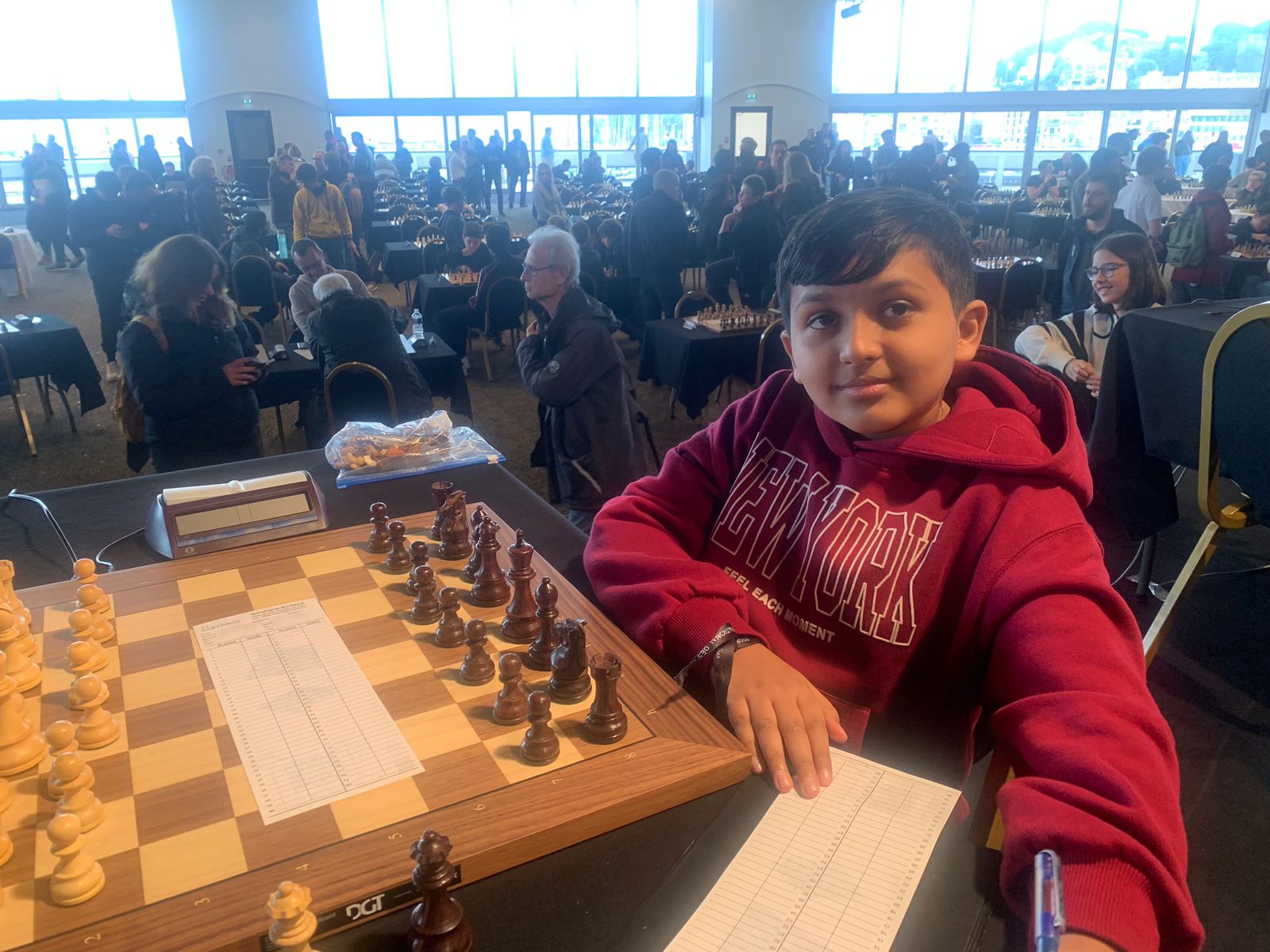 12-year-old Aarav Sarbalia is a FIDE Grasp, which is 2 rungs under the grandmaster degree. (File Picture)
It’s a apply that has caught on in Indian chess previously 15 years: younger stars travelling overseas accumulating norms or scores. Round 2015-16, this grew to become frequent amongst gamers rated above 2100. However since COVID, gamers flying overseas chasing norms has turn out to be so commonplace that even gamers within the 1700-1800 scores bracket are doing it.
“Gamers take round six-eight journeys to play in European tournaments in a 12 months lately to achieve norms. That prices Rs 15-20 lakh, together with touring and training. This determine just about doubles when it’s a participant chasing GM norms,” says Sreekar Chennapragada, whose MGD1 not solely organises tournaments but in addition manages gamers like Arjun Erigaisi.
ALSO READ | India’s chess prodigies chase norms, ranking factors and goals, one finances journey to Europe at a time
Story continues under this advert
Realising that there was an actual hole in tournaments in India the place GM norms may very well be simply achieved, organisations like Pravaha Basis and Chola Chess are actually organising GM-norm tournaments within the nation. Constrained by funds, gamers like Mayank and Aronyak have performed loads of their occasions in India, however GMs norms are often gained overseas.
What Yatin mentioned in regards to the lack of sponsorship is a typical chorus in chess. Everybody from Mrinal to Monomita voices their frustrations with attracting sponsors, regardless of their youngsters’ expertise being apparent. Monomita additionally factors out that till a number of years in the past, Sports activities Authority of India would give one-time incentives for IMs and GMs for getting the titles, which is gone now.
The associated fee break-up
If chess gamers don’t spend on extreme tools, and don’t often want sports activities science professionals, the place do they spend all the cash?
It’s spent on the metaphorical village it takes to lift a prodigy.
Story continues under this advert
It begins with the coaches. Like most different sports activities, elite gamers in chess additionally transition into teaching, many occasions with out truly retiring from enjoying themselves. However in chess, not like in different sports activities, coaching prices are calculated on an hourly foundation. And an hour of a GM’s time as a coach can go wherever from Rs 10,000 to Rs 20,000. A coach for a grandmaster to compete on the highest degree (occasions like Candidates) are even greater.
Mrinal says that many occasions coaches have contracts that stipulate a minimal variety of hours that the participant has to work with them, relatively than only a one-off, hour-long session. Yatin factors on the flip facet: since high coaches are at all times in excessive demand, generally you can’t even get them for greater than an hour, so you find yourself working with a number of coaches, which once more means greater expenditure.
Then, there are coaching companions — elite gamers one can rent on an hourly foundation to play coaching video games in opposition to. A rising star like Aarav can enter tournaments however can solely pray to be paired with a high grandmaster. Which implies, in the event that they need to sharpen their expertise regularly, the surest manner can be to rent a coaching companion, who will even cost eye-watering charges for an hour’s price of enjoying coaching video games.
Then there are seconds – good chess gamers who act as aides to different chess gamers, serving to them with opening preparation, amongst different issues.
Story continues under this advert
Typically, seconds or coaches signal contracts with gamers stipulating a proportion of the prize cash they earn in tournaments.
“The gamers who’re above 2600 ranking (when a participant turns into a GM, their ranking is often round 2500), they spend not less than round Rs 4-5 lakh monthly on the game,” is Mrinal’s estimate.
He’s fast so as to add that after you turn out to be a grandmaster, you get “circumstances”: match organisers will deal with your lodging, sometimes even flights.
However till you get there, it’s all paid for by dad and mom.
Story continues under this advert
Within the case of gamers like Mayank, such journeys demand artistic considering to deliver prices below management.
“We keep in very fundamental low-cost flats in Europe, share flats, with a typical washroom at occasions. These are often removed from the centre of the city,” says Monomita, earlier than mentioning that prices rise when you play in Nordic international locations. “We additionally carry meals from house wherever we will.”
With each their sons newly-minted grandmasters, each Mrinal and Monomita are actually calculating what it is going to take for them to rise greater.
“The place my son is standing in the meanwhile — a ranking within the 2550 bracket — simply to go as much as 2650 will value a lot cash that I don’t even dare dream about it,” says Mrinal.