
For somebody who has been writing about tech for years and is in his 30s, I’ve at all times questioned why entrepreneurs and types don’t goal their merchandise at older adults and the aged. All I see round me is a decisive push to get observed by youthful demographics. However right here’s the truth: the actual buying energy lies within the arms of older adults. And right here’s a enjoyable reality – they don’t depend on bank cards or stay paycheck to paycheck, not like Gen Z.
I might like to see a shift in how manufacturers goal merchandise for seniors sooner or later. My latest assessment of the Google Pixel 10a and the readers’ responses thanking me for bringing older adults into the tech dialog made me realise this much more clearly.

Accessibility is driving change in how expertise is designed. That additionally brings me to a less-discussed facet of tech: accessibility. It might not appear “cool” to some, however accessibility expertise is the inspiration of many mainstream applied sciences we use at this time. Issues like Voice assistants, speech-to-text software program, captions, and stay transcription had been designed for deaf and hard-of-hearing people. Actually, display screen readers and high-contrast show modes had been created to assist blind and partially sighted customers entry digital content material.
Accessibility is bringing mainstream innovation
Over the previous few years, with the assistance of nonprofits, suppose tanks, and governments, tech corporations have been pushed to design their merchandise round accessibility and inclusivity. The credit score goes to stricter compliance mandates and authorized strain, that are proving to be catalysts for optimistic change within the tech business. However a higher emphasis on designing merchandise round accessibility shouldn’t be solely serving to folks with disabilities and the aged – it’s making merchandise higher for everybody.
No marvel accessibility drives mainstream innovation, and people who embody digital accessibility as a characteristic could profit greater than those that ignore it.
I’m glad that fashionable units such because the iPhone, Google Pixel, Android smartphones, Macs, and Home windows PCs all have built-in accessibility options, though not everyone seems to be conscious of them. Actually, I take advantage of many accessibility options which may be designed for folks with disabilities however profit everybody.
 Dwell Captions is a game-changing accessibility characteristic on the iPhone. (Picture: Anuj Bhatia/The Indian Categorical)
This helpful information to accessibility instruments is free on the units you already use day by day. They’re accessible, although some could be discovered deep throughout the settings.
Story continues beneath this advert
As I discussed earlier than, anybody can use these accessibility instruments on smartphones and laptops, they usually can particularly profit the aged and seniors. In case you have ageing dad and mom, do strive these settings. I hope these accessibility instruments deliver optimistic modifications and make their lives simpler.
A secret ‘senior mode’ on iPhone
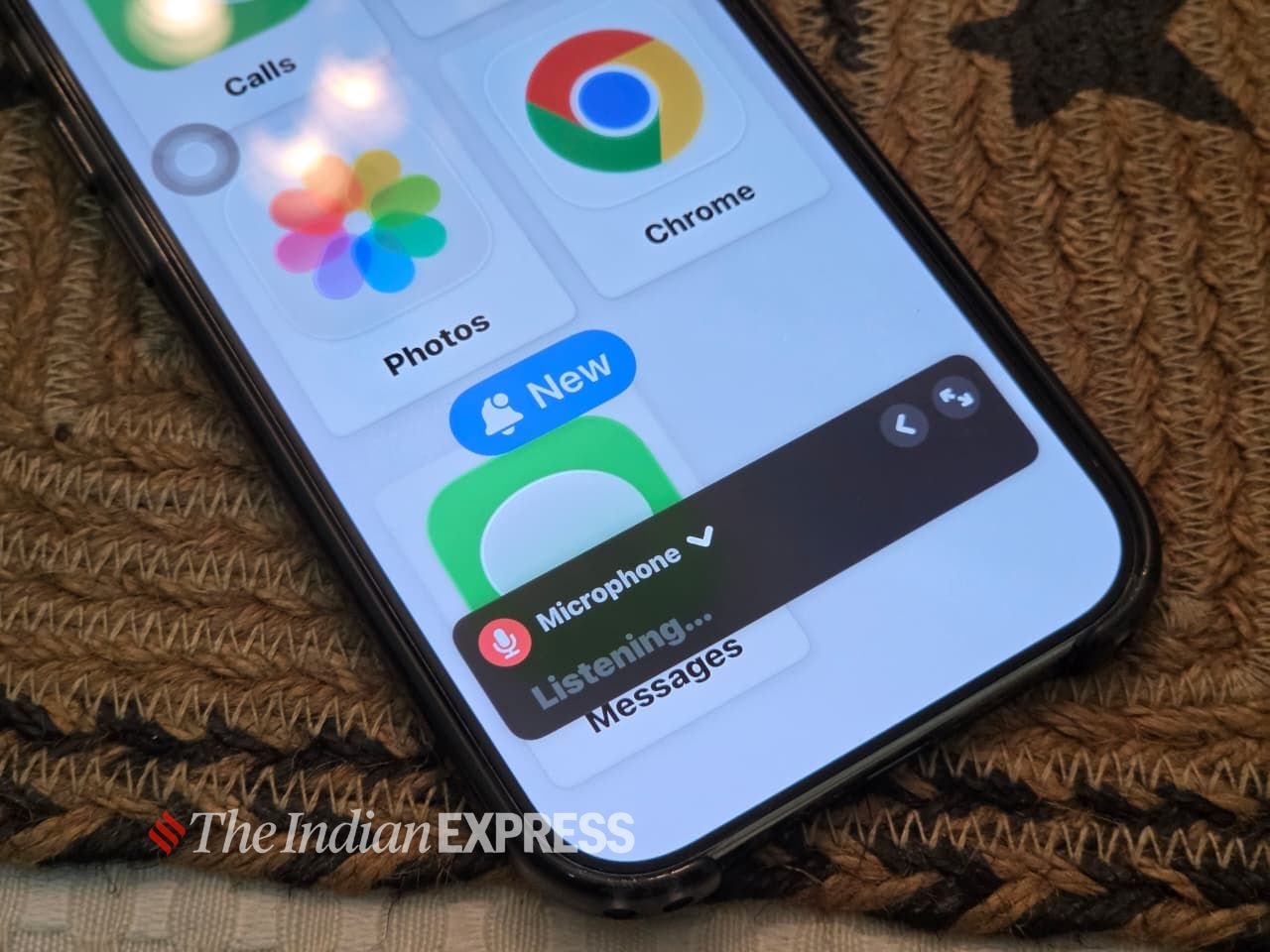
I’m fairly positive you’ve got by no means heard in regards to the ‘senior mode’ on the iPhone. A number of years in the past, Apple launched one thing known as Assistive Entry on the iPhone, which is mainly a simplified consumer interface. Though this customisable interface is designed for these with cognitive impairments and guide dexterity points, I discovered it helpful for older adults and the aged.
With Assistive Entry, you may pare down the house display screen to its fundamentals, displaying apps in both a easy row format or a big tile format. Calls, Messages, Digicam, Music, and Images are presently optimised for Assistive Entry. What’s nice about this mode is that it limits swipe gestures, stopping customers from unintentionally opening completely different menu screens.
Nevertheless, this characteristic requires iOS 17 or later. To allow Assistive Entry, open Settings > Accessibility. Scroll down and faucet Assistive Entry, then choose Set Up Assistive Entry. Faucet Proceed, select Rows (record view) or Grid (massive icons) for the app structure, after which customise the apps by choosing important ones corresponding to Calls, Digicam, Images, Messages, and Music. Set a passcode and begin utilizing it.
Story continues beneath this advert
To exit ‘senior mode’, and return to the traditional interface, triple-click the facet button (or House button on older fashions), faucet Exit Assistive Entry, and enter the devoted passcode.
For Google Pixel customers, nonetheless, there’s a Easy View characteristic that you simply received’t discover on every other Android smartphone. The characteristic will increase textual content and icon sizes, provides navigation buttons, and makes the display screen structure simpler to make use of.
Dwell Captions is a sport changer for the aged
I’ve seen older folks, particularly those that are deaf or laborious of listening to, wrestle to get on a video name. The anxiousness and nervousness are actual. Fortunately, when you activate Dwell Captions, which is already constructed into the iPhone. It’s free and it really works.
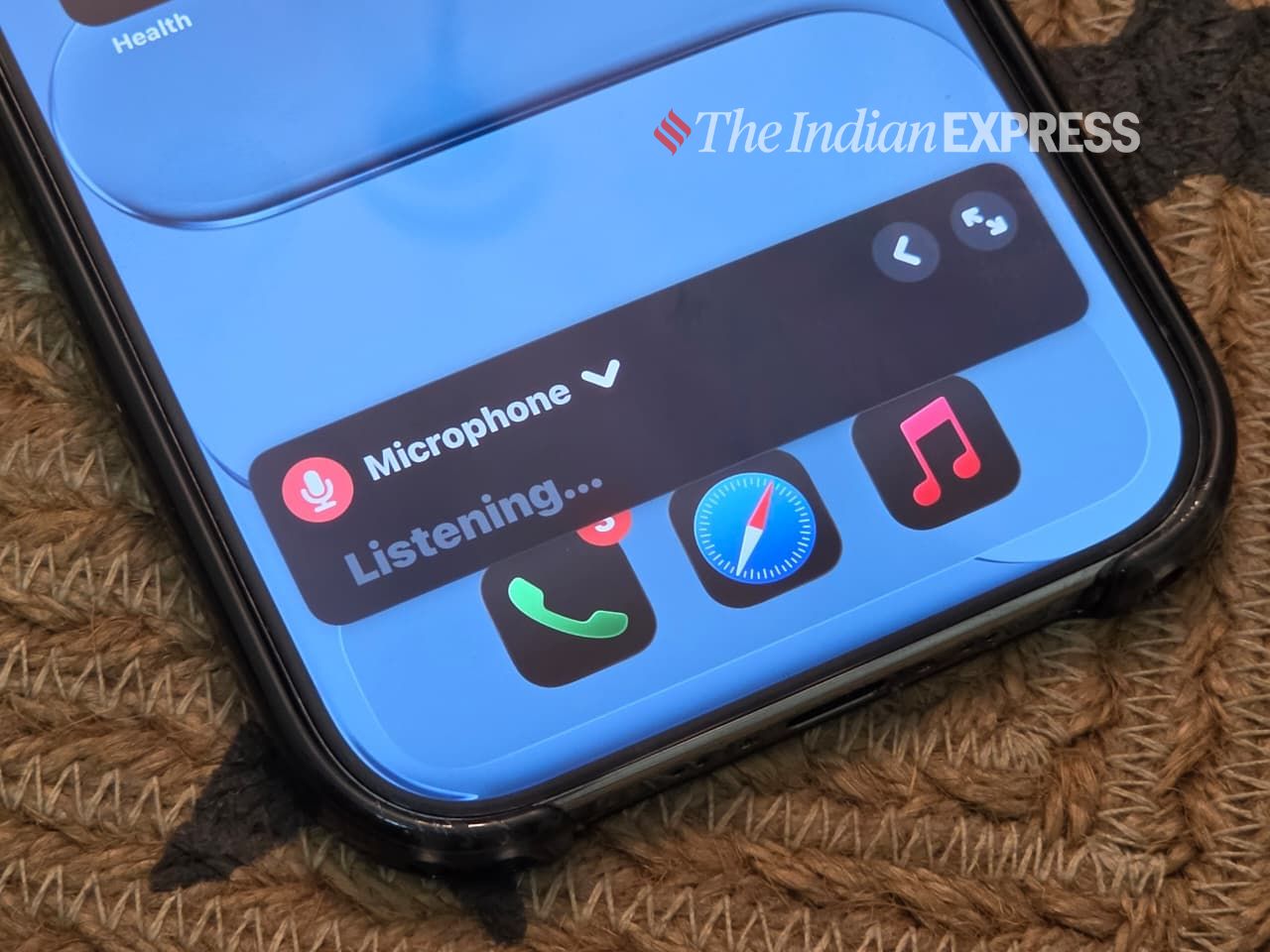 You can even add a shortcut within the quantity management for fast entry. (Picture: Anuj Bhatia/The Indian Categorical)
Dwell Captions is a game-changing accessibility characteristic on the iPhone that reveals real-time textual content of audio in your display screen. It may well transcribe cellphone calls, FaceTime, and different sounds enjoying in your gadget, together with YouTube movies. To allow it, go to Settings > Accessibility > Dwell Captions. As soon as turned on, your iPhone makes use of on-device processing to show captions throughout apps. Nevertheless, accuracy could range, so it shouldn’t be relied on in high-risk or emergency conditions. I want Hindi or different regional languages had been supported.
Story continues beneath this advert
Android additionally has an equal Dwell Caption characteristic, which gives real-time, dynamic textual content captions for any speech performed by your gadget. It really works throughout cellphone calls, podcasts, movies, audio messages, and even recordings. To allow it, go to Settings > Accessibility > Captions > Dwell Caption, then activate “Use Dwell Caption.” You can even add a shortcut within the quantity management for fast entry. English-to-Hindi language help is on the market.
A lesser-known ‘Choose to Communicate’ characteristic
On my Google Pixel 10 Professional Fold, I just lately found a lesser-known accessibility characteristic known as “Choose to Communicate.” Though it’s designed for customers with visible impairments, I’ve develop into fairly keen on it, particularly when studying long-form articles. Merely put, Choose to Communicate reads textual content in your display screen aloud. It helps customers who wrestle with studying or processing textual content and is very helpful for the aged.
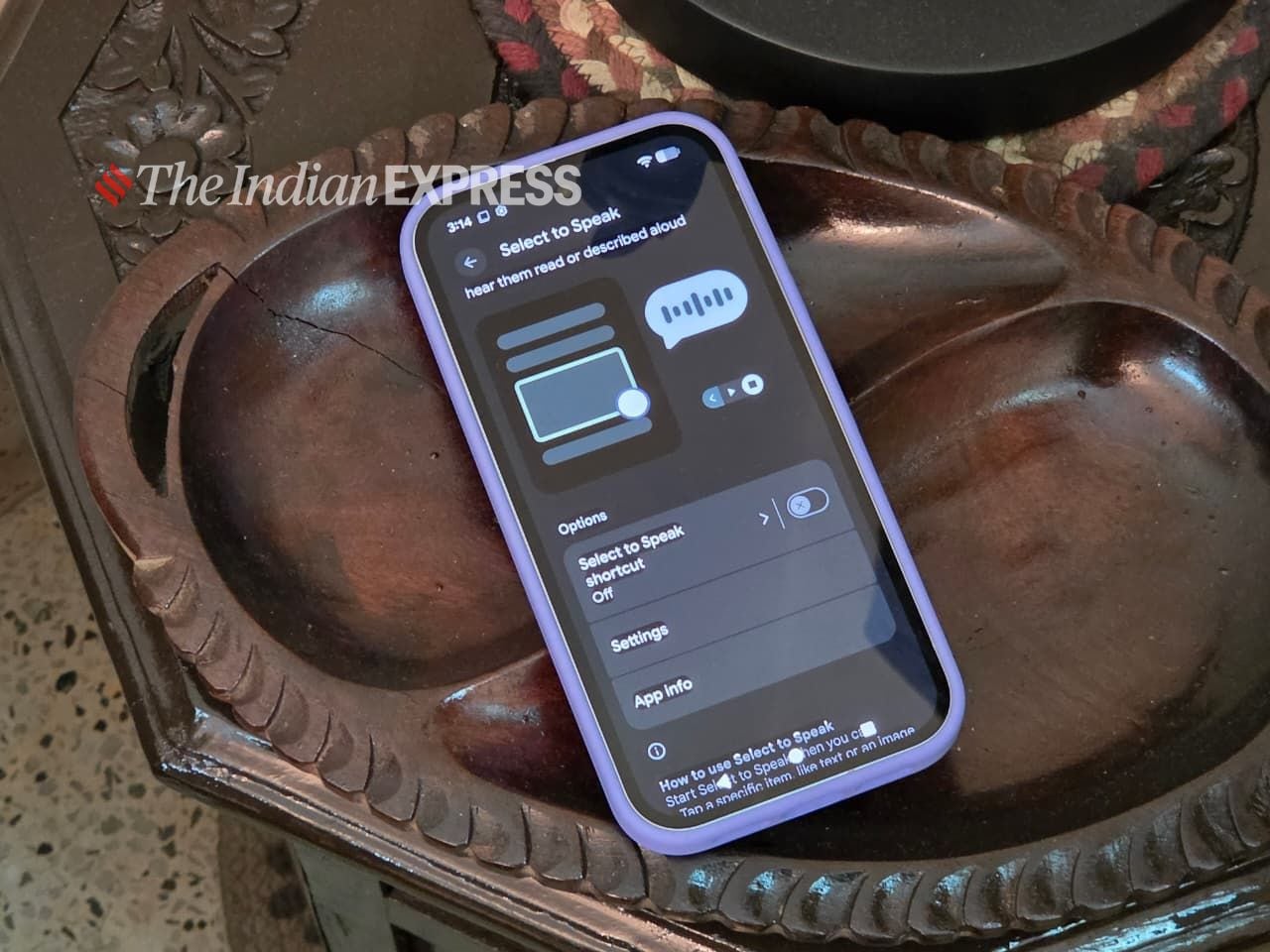 Merely put, Choose to Communicate reads textual content in your display screen aloud. (Picture: Anuj Bhatia/The Indian Categorical)
When enabled, you need to use the accessibility shortcut to pick textual content and have it learn aloud. Flip it on by looking for “Choose to Communicate” in Settings, then use the on-screen button to faucet or drag over textual content for playback.
In the meantime, the iPhone affords a VoiceOver characteristic that reads and describes on-screen content material. It depends on gestures. Faucet as soon as to pick and double-tap to activate.
Story continues beneath this advert
Grayscale mode on the iPhone is much less harsh on the eyes
Whereas folks normally have color imaginative and prescient deficiency from delivery, many can develop color blindness later in life. It may well happen when varied well being issues harm both the cone receptors or the a part of the mind that interprets color.
Being color blind doesn’t imply one can’t see any colors; it merely means having problem figuring out or distinguishing between them. In case your dad and mom have developed color blindness, the iPhone has a black-and-white mode (or Greyscale, as it’s known as) in Settings beneath “Color Filters” to scale back eye pressure. It softens display screen brightness and hues.
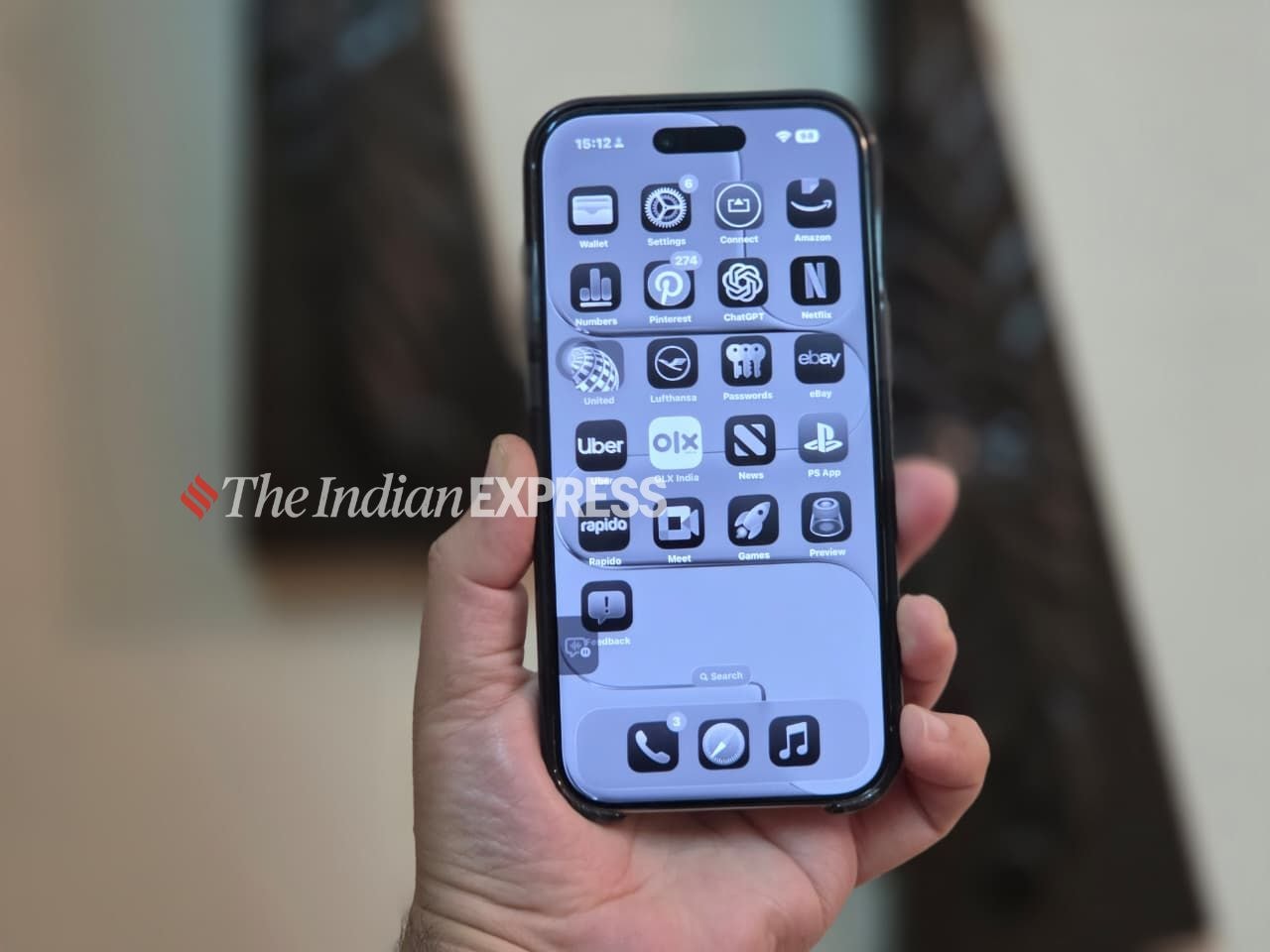 Due to this mode, my cellphone utilization was drastically diminished. (Picture: Anuj Bhatia/The Indian Categorical)
As an experiment, I’ve been utilizing Grayscale mode for the previous few days. I wouldn’t have color blindness, however anybody who’s hooked on their smartphone and desires to chop down on cellphone utilization can use it, as I did. For the primary few hours, it was troublesome to adapt to the black-and-white mode, and I even had a headache.
Over the following few days, I tailored to Grayscale mode, and it felt extra comfy. Due to this mode, my cellphone utilization was drastically diminished, and I began to expertise much less of the senseless scrolling I’m used to on my cellphone. Positive, it may be troublesome to completely use Grayscale mode, however when you get used to it, switching again to regular mode can really feel uncomfortable.
Story continues beneath this advert
For Android customers, Google affords an identical black-and-white mode in Accessibility settings beneath “Textual content and show.” Faucet “Color Correction” to decide on filters.